First Grade Science Curriculum {Little Science Thinkers}

Have you ever struggled with planning and implementing effective, engaging science lessons in your first grade classroom? Are you looking for a first grade science curriculum that is teacher and student friendly that won’t require you to search and supplement with additional resources? If so, please read on. This post is for you!

 
Maybe your district supplies you with a big-box curriculum that isn’t user-friendly. Maybe it creates too much work for you. Maybe it doesn’t hold your students’ attention. Or maybe you don’t have a curriculum and you are left spending your weekends piecing together ideas from Pinterest.
 
No more. I’m here to tell you how we can solve all of those problems with the Little Science Thinkers Curriculum.
 
Little 1st Grade SCIENCE Thinkers is a complete curriculum specifically for First Graders.
It’s everything you need to introduce, teach, practice, and assess your students.

It is cross-referenced and aligned to the main topics of many state Science Standards as well as the NGSS.

This curriculum is 100% researched, written and created by me, a teacher. You can be assured that I do not hire other people to write or create any part of my units.
This curriculum contains everything you need in a neat, organized package.
It’s teacher friendly and student-approved!
 
I’m going to walk you through the format of the entire curriculum. First, let’s look at the units.
 
 
Each four-week unit is meant to be taught three times per week with 30-minute lessons. I know that your time is valuable and you need to make the most of every minute, so each lesson is jam packed with content and engagement.

The lessons are quick-paced, written in teacher language, and primary-friendly. You could give these plans to a sub or student teacher, and there would be no question as to what they need to do! It’s all there for you.

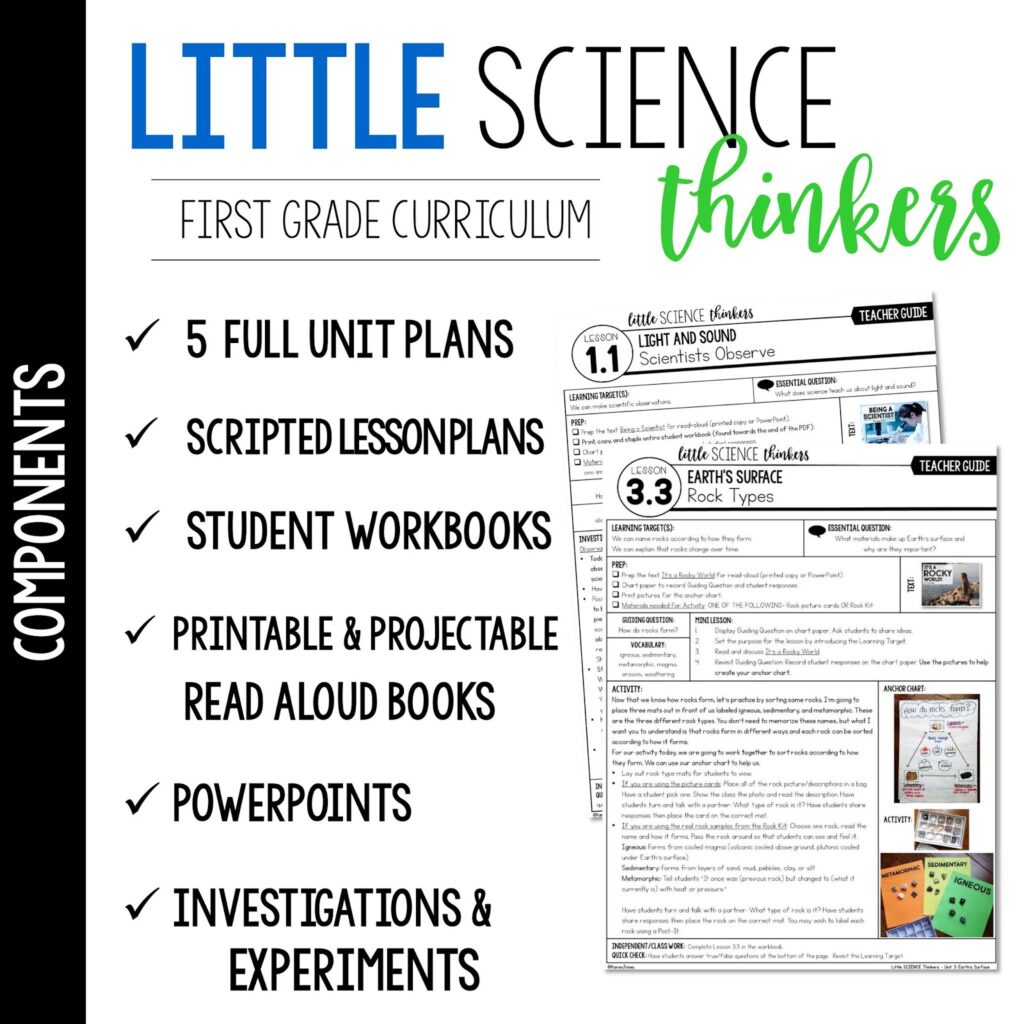
Here are the components of each unit. 
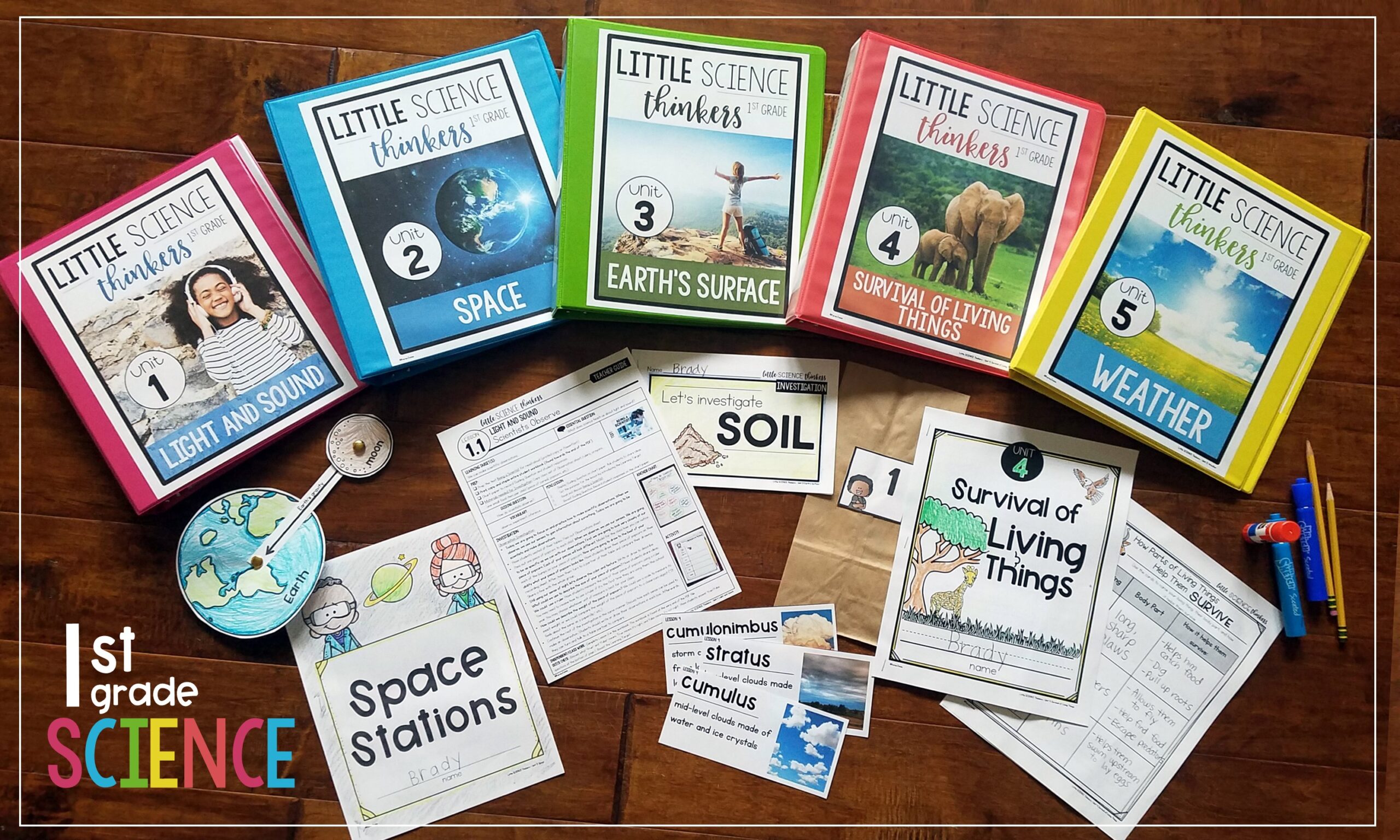
*Update for 2025: Unit 1: Light and Sound was updated to Unit 1: Matter and Energy

Print and use *complete* lesson plans & a full teacher guide to help you plan and teach.
 

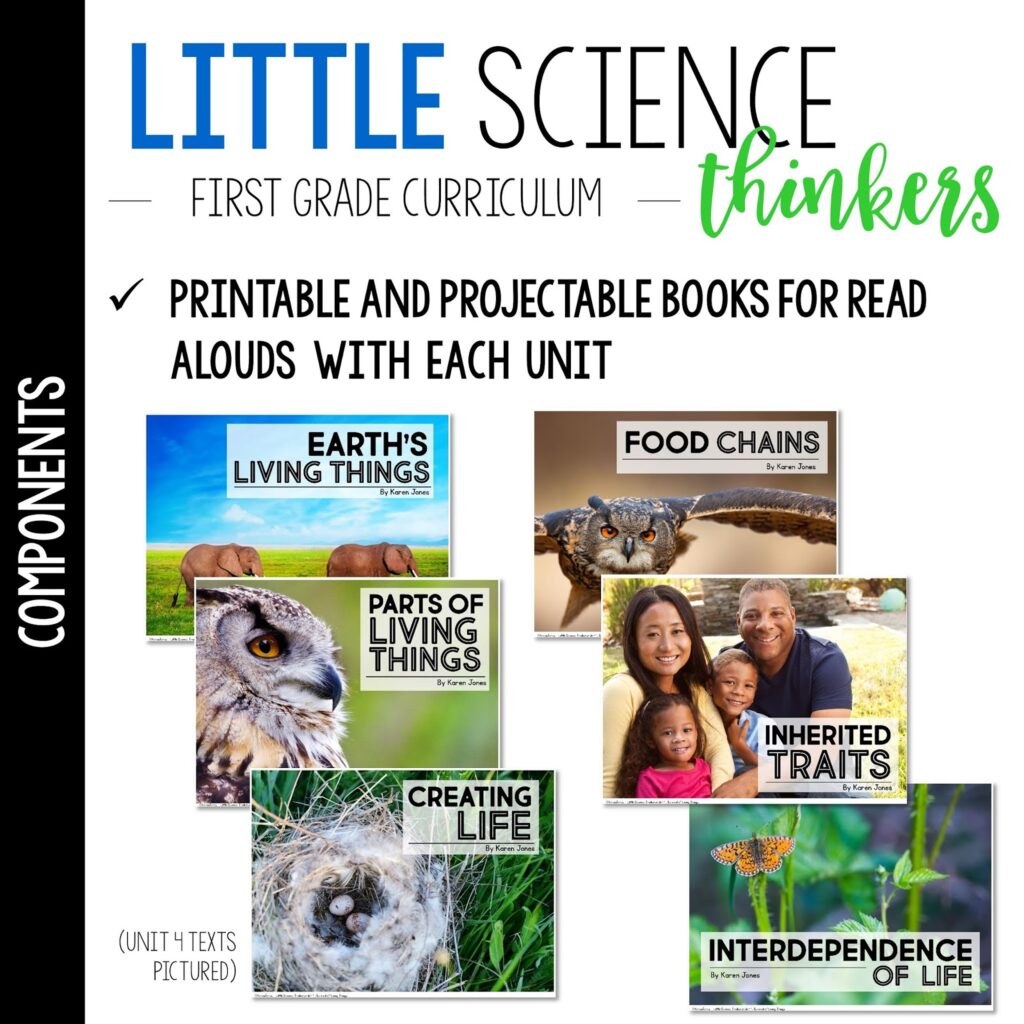
Nonfiction Texts are INCLUDED for read-alouds that go with each content lesson (about 7-8 texts PER UNIT):


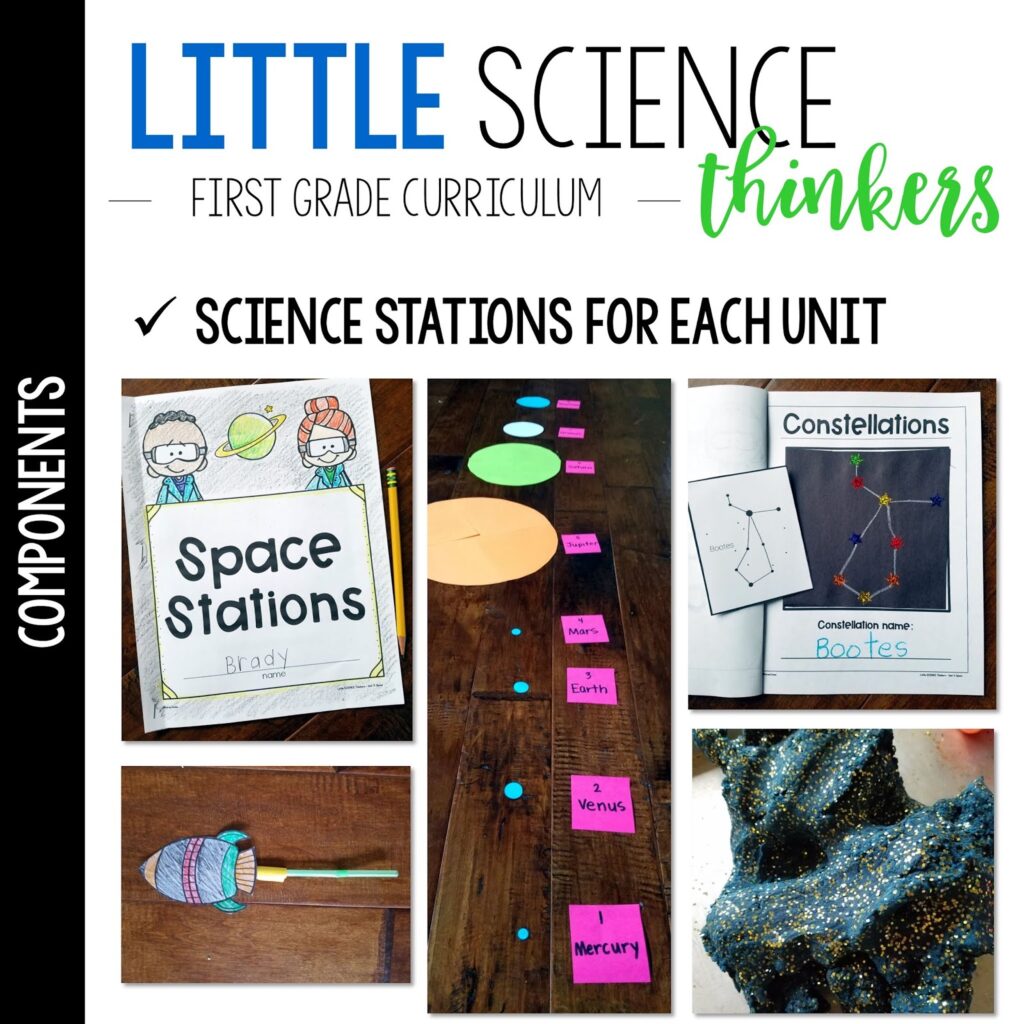
Science Stations (at least 4 stations PER UNIT):
 
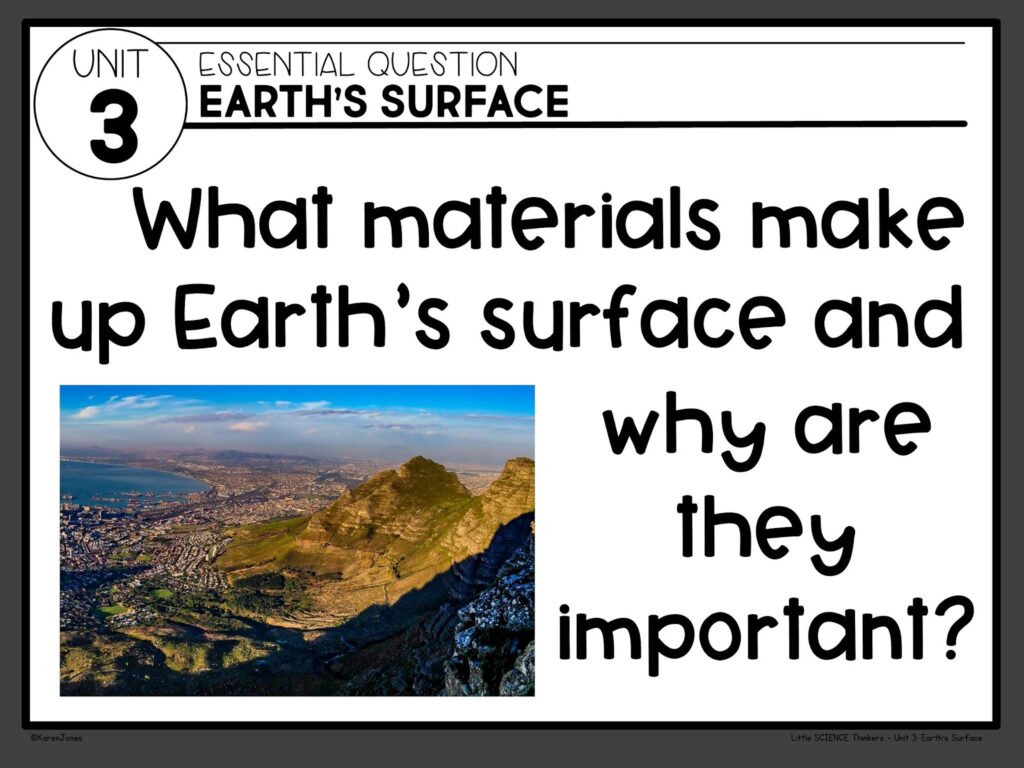
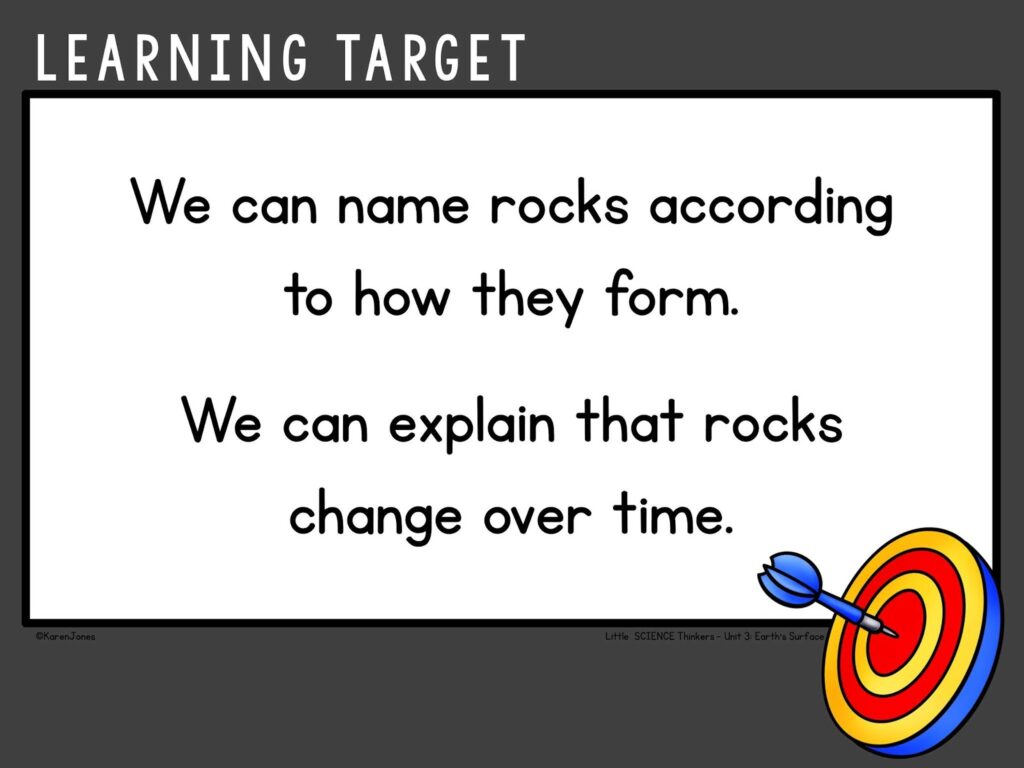
Essential Question and Learning Targets for each lesson
that can be posted on a Focus Wall:


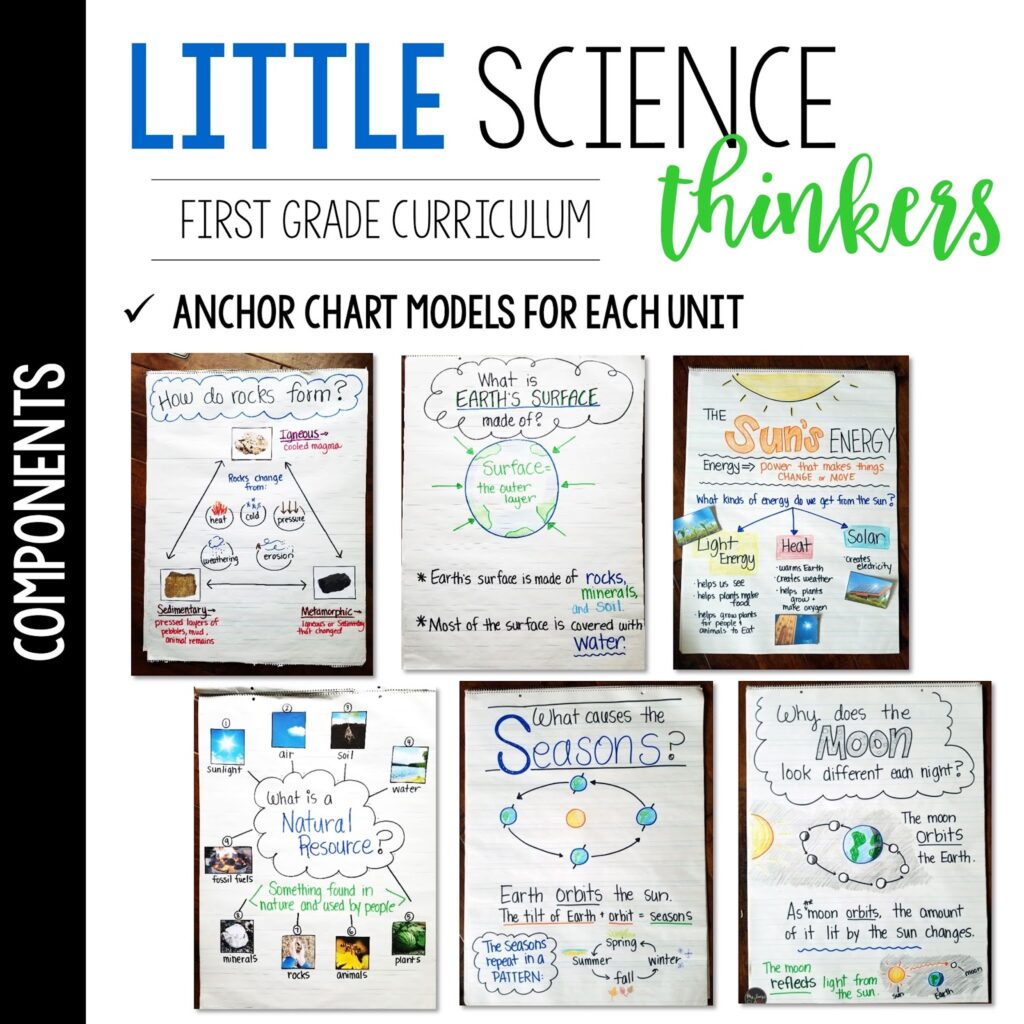
Anchor Charts and TONS of materials and activities to guide your teaching:


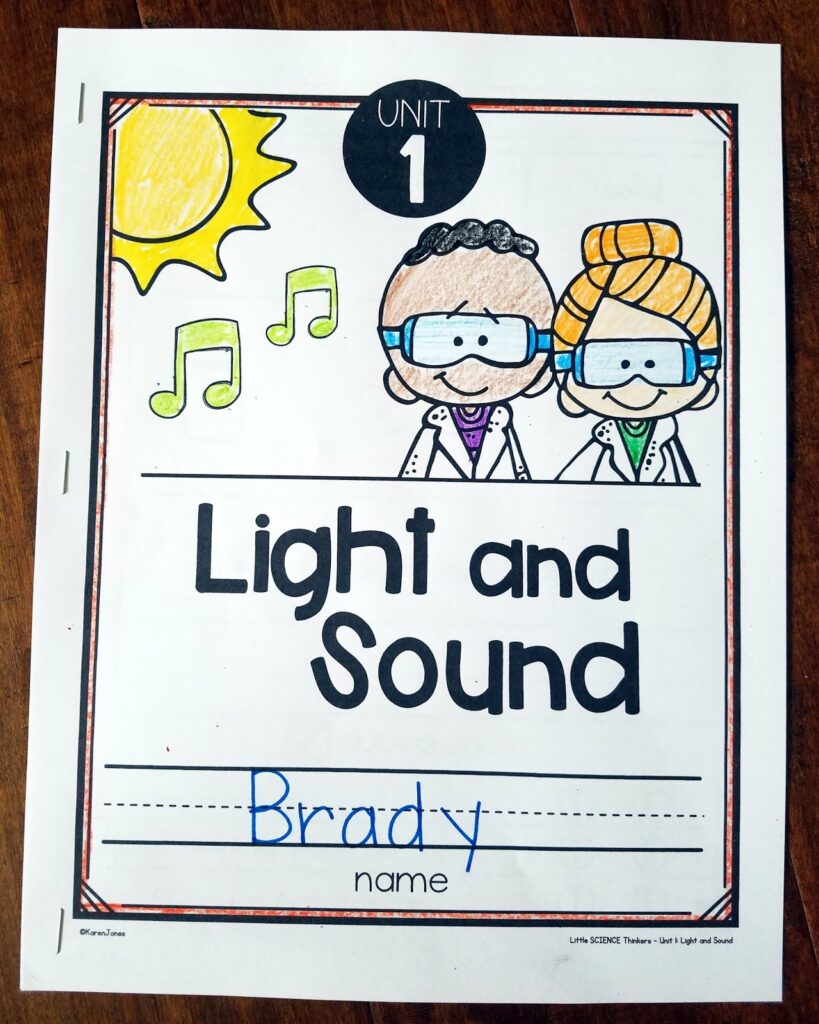
Student Workbook with activities to follow most lessons, with directions and activities written in primary-friendly language.


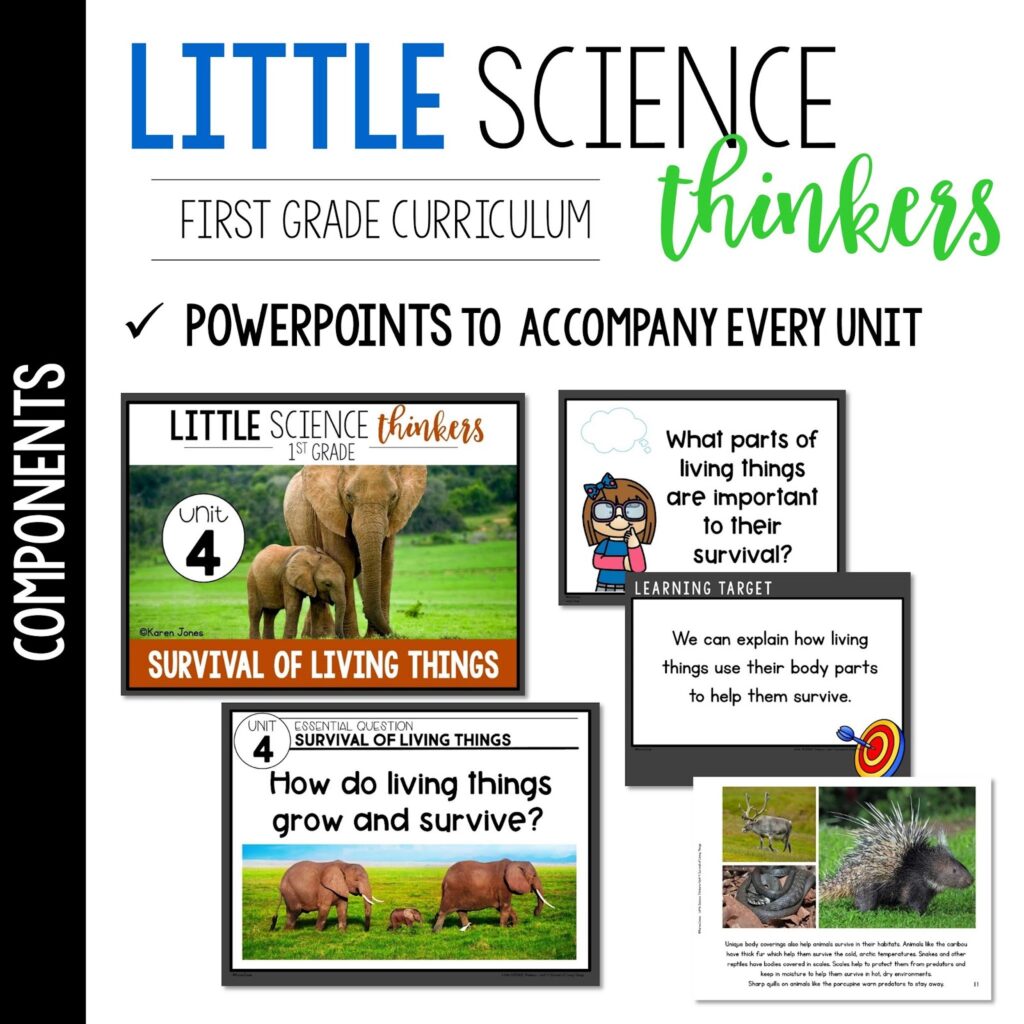
A COMPLETE UNIT PowerPoint to guide your teaching during EACH and EVERY Lesson!
Pull up the PowerPoint on your Smart Board or on a projector:
 
Little Science Thinkers
 
 
primary-appropriate Assessment and Rubric:


I can assure you that this curriculum is VERY easy to use and VERY engaging for your kids.
 
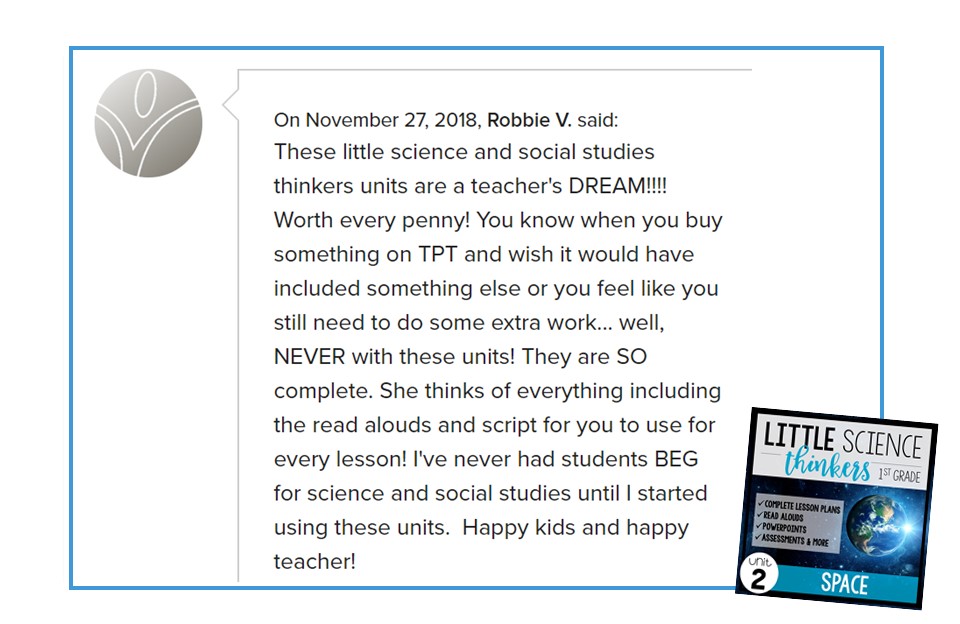
Here’s what teachers who have used the curriculum are saying:

1ST GRADE SCIENCE LESSONS


You can see all of the lessons included, and find all of my Little 1st Grade Science Thinkers units here:
   

Lesson 1: SCIENTISTS OBSERVE
Lesson 2: SCIENCE TOOLS AND SAFETY
Lesson 3: THE SCIENTIFIC METHOD
Lesson 4: STATES OF MATTER
Lesson 5: PROPERTIES OF MATTER
Lesson 6: HOW MATTER CHANGES (2 DAY LESSON)
Lesson 7: ENERGY (FOCUS ON HEAT ENERGY)
Lesson 8: SOUND AND VIBRATIONS
Lesson 9: LIGHT
Lesson 10: USING LIGHT AND SOUND TO COMMUNICATE
Lesson 11: COMMUNICATING USING LIGHT OR SOUND INVESTIGATION
Lesson 12: HANDS-ON SCIENCE STATIONS (2 DAY LESSON)
Lesson 13: REVIEW
Lesson 14: UNIT ASSESSMENT

Lesson 1: EARTH’S PLACE IN SPACE
Lesson 2: THE SUN’S ENERGY
Lesson 3: PATTERNS OF DAY AND NIGHT
Lesson 4: PATTERNS OF THE SEASONS
Lesson 5: PATTERS OF DAYLIGHT
Lesson 6: OUR SOLAR SYSTEM
Lesson 7: THE MOON – CRATERS
Lesson 8: THE MOON – PHASES
Lesson 9: GRAVITY
Lesson 10: SOLAR SYSTEM INVESTIGATION
Lesson 11: HANDS-ON SCIENCE STATIONS
Lesson 12: REVIEW
Lesson 13: UNIT ASSESSMENT

UNIT 3: EARTH’S SURFACE
Lesson 1: EARTH’S PLACE IN SPACE
Lesson 2: THE SUN’S ENERGY
Lesson 3: PATTERNS OF DAY AND NIGHT
Lesson 4: PATTERNS OF THE SEASONS
Lesson 5: PATTERS OF DAYLIGHT
Lesson 6: OUR SOLAR SYSTEM
Lesson 7: THE MOON – CRATERS
Lesson 8: THE MOON – PHASES
Lesson 9: GRAVITY
Lesson 10: SOLAR SYSTEM INVESTIGATION
Lesson 11: HANDS-ON SCIENCE STATIONS
Lesson 12: REVIEW
Lesson 13: UNIT ASSESSMENT

*This unit requires purchasing a rock kit. I recommend this kit from Amazon. It is an affiliate link. As an Amazon Associate, I earn a percentage of qualifying purchases.
Toysmith Rock Science Kit


UNIT 4: SURVIVAL OF LIVING THINGS

Lesson 1: LIVING AND NONLIVING THINGS
Lesson 2: HOW PARTS OF LIVING THINGS HELP THEM SURVIVE
Lesson 3: BIOMIMICRY INVESTIGATION
Lesson 4: LIFE CYCLES
Lesson 5: OFFSPRING OF LIVING THINGS
Lesson 6: INHERITED TRAITS
Lesson 7: INHERITED TRAITS INVESTIGATION
Lesson 8: INTERDEPENDENCE OF PLANTS AND ANIMALS
Lesson 9: NATURE WORKING TOGETHER
Lesson 10: FOOD CHAINS
Lesson 11: SCIENCE STATIONS
Lesson 12: SCIENCE STATIONS
Lesson 13: REVIEW
Lesson 14: UNIT ASSESSMENT


UNIT 5: WEATHER

Lesson 1: ALL ABOUT WEATHER
Lesson 2: HOW WEATHER FORMS
Lesson 3: PRECIPITATION
Lesson 4: CLOUDS
Lesson 5: CLOUD INVESTIGATION – CREATING A CLOUD
Lesson 6: CLOUD INVESTIGATION – CLOUDS IN OUR ATMOSPHERE
Lesson 7: SEVERE WEATHER
Lesson 8: FORECASTING WEATHER
Lesson 9: CLIMATE
Lesson 10: SCIENCE STATIONS (2 DAYS)
Lesson 11: REVIEW
Lesson 12: UNIT ASSESSMENT